Invasive Plants & Animals
Home » Water Quality »
Clean-In Clean-Out Inspect Your Craft Invasive Plants & Animals Score Your Shore
Report Suspicious Vegetation!
If you suspect a new infestation of an aquatic invasive plant or animal, note the exact location, take a photo or keep the specimen, and contact the AIS specialist in our area:
Mark Ranweiler, DNR Invasive Species Specialist
mark.ranweiler@state.mn.us
218-616-2117
Learn More.
Access the DNR AIS website here:

Aquatic Invasive Species - A Minnesota Handbook
A pictorial handbook provides a guide to identifying aquatic invasive species found in Minnesota lakes (takes a little while to load - big file) (but worth the wait).
Handbook provides a guide to both invasive and native plants, showing closeup photos of leaf detail to help you recognize the difference.
View Handbook: Aquatic Handbook PDF
Here is more information on various invasive aquatic species to be on the lookout for...
Curly-leaf Pondweed
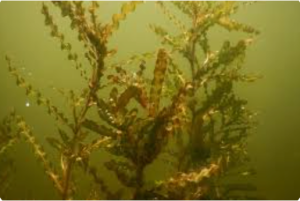
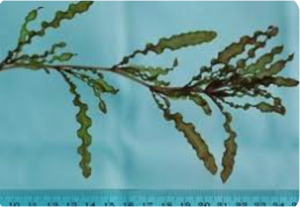
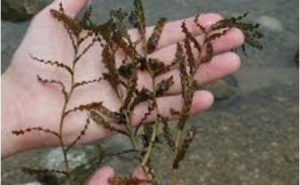
Curly-leaf pondweed is a rooted, submersed aquatic plant. Its coloration varies from olive-green to reddish-brown. Wavy, lasagna-like leaves grow approximately a half-inch wide and two to three inches long. Leaves have an obvious mid-vein, “toothed” or serrated edges and blunt tips. Leaves are arranged alternately, are directly attached to the stem, and become denser toward the end of the stem. The main stem can be various colors including white, green, brown, and red, and tends to branch multiple times near the top of the plant. The plant may mat at the surface but does not have true floating leaves.
Curly-leaf pondweed spreads primarily through the movement of water-related equipment. Plant fragments and turions can get stuck on trailers, motors, docks, boat lifts, swim rafts and inside watercraft (boats, canoes and kayaks). Turions, which may be hidden in mud and debris, can stick to anchors as well as scuba, fishing, and hunting gear.
The impacts of Curly-leaf pondweed include:
- Forms dense mats at the water’s surface that inhibits water recreationists.
- Overtakes habitat and outcompetes native aquatic plants, potentially lowering diversity.
- Provides unsuitable shelter, food, and nesting habitat for native animals.
- Midsummer die-offs can litter the shoreline with dead plants.
Milfoil
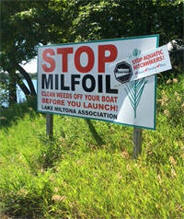 Eurasian watermilfoil is a submersed invasive aquatic plant that was inadvertently introduced to Minnesota. Milfoil was first discovered in Lake Minnetonka during the fall of 1987. Eurasian watermilfoil can limit recreational activities on water bodies by forming mats on the water surface, and alter aquatic ecosystems by displacing native plants.
Milfoil is spread from one body of water to another primarily by the introduction of plant fragments. A milfoil fragment only a few inches long can form roots and grow into a new plant. The most important action that you can take to limit the spread of milfoil is to remove all vegetation from your watercraft before you move from one body of water to another. See Inspect Your Craft and Clean-In Clean-Out for more details.
Starry Stonewort
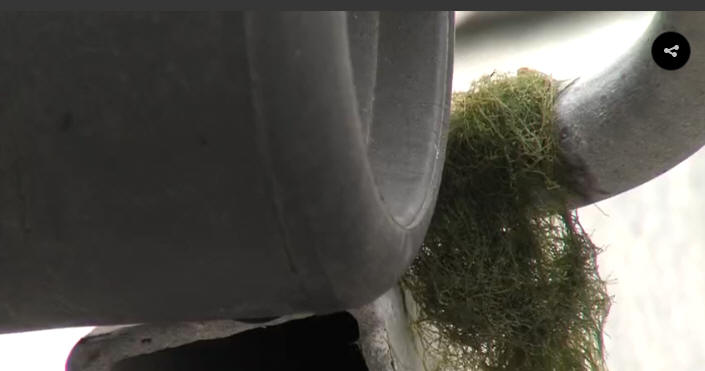
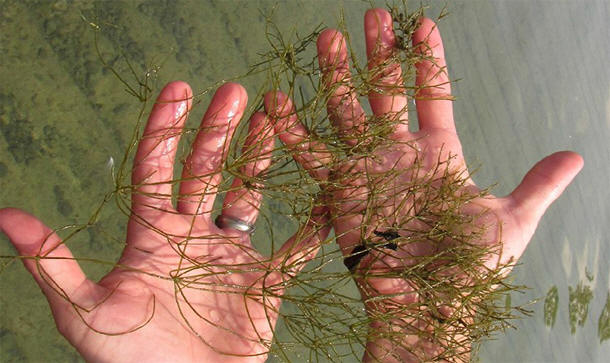 Starry Stonewort is a grass-like algae that are not native to North America that can grow tall and dense, forming dense mats on the surface. The plant was first confirmed in Minnesota in late August 2015. In August 2016, Starry Stonewort was confirmed in several north-central Minnesota lakes. This invasive plant can interfere with boating and recreation, and potentially displace native plant species, and impact fish and other animals.
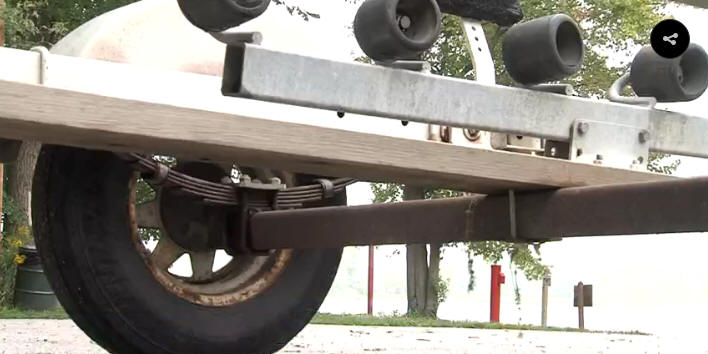
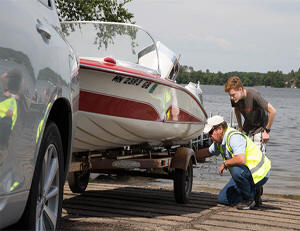
Boaters, fisherman, and lakeshore owners need to be vigilant in the inspections and cleaning of boat trailers, boats, personal water crafts, docks, and any other items that could contain small fragments of the starry stonewort bulbils.
If you see anything suspicious, you should contact a DNR invasive species specialist. Our local contact is Mark Ranweiler. He can be contacted at 218-739-7576.
How To Identify Starry Stonewort
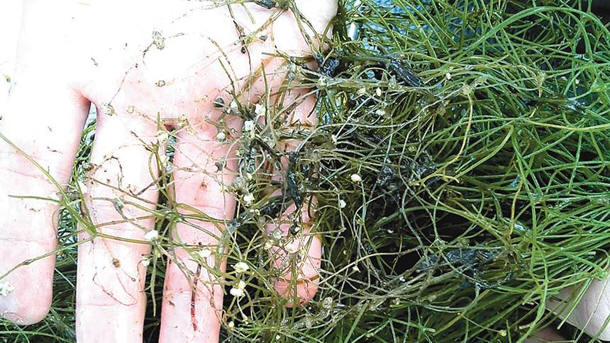
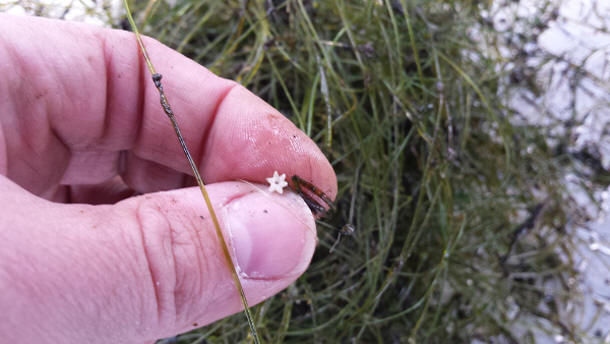
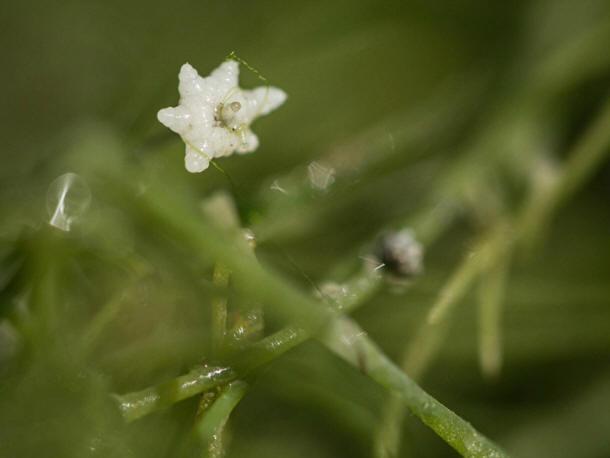
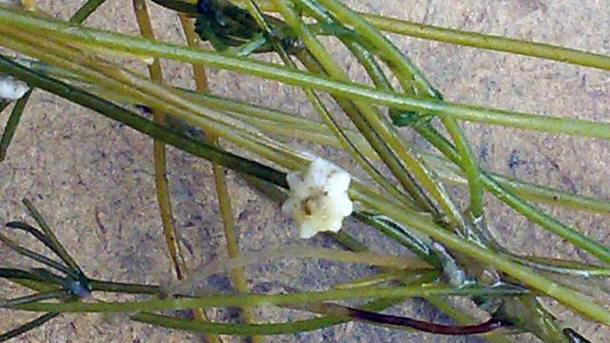
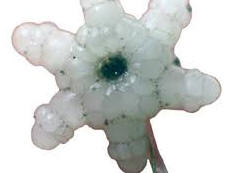 Starry Stonewort is similar in appearance to native grass-like algae such as other stoneworts and musk-grass. Starry Stonewort can be distinguished from other grass-like algae by the presence of star-shaped bulbils.
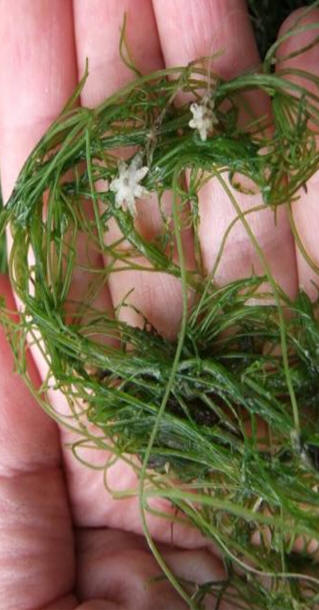
How It Spreads
Starry Stonewort is believed to be spread from one body of water to another by the unintentional transfer of plant fragments and bulbils, the star-like structures produced by the plant.
These fragments can be transferred on trailered boats, watercraft, docks, boat lifts, anchors, or any other water-related equipment that is not properly cleaned. Inspect your boat!
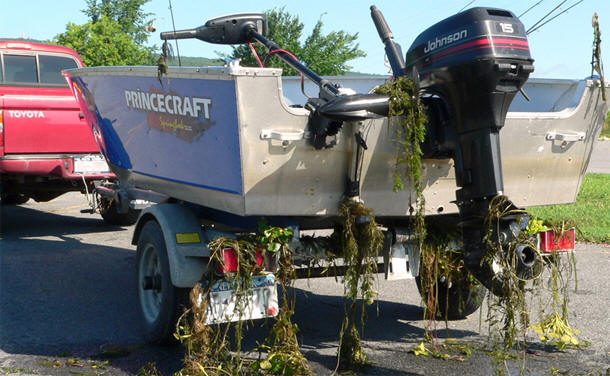
The Lake Miltona Association (LMA) continues to contract with Douglas County for additional inspection hours at our boat launch access sites. The Association urges everyone using the lake to take precautions and steps to prevent further spread of invasive plant species.
Identification Images
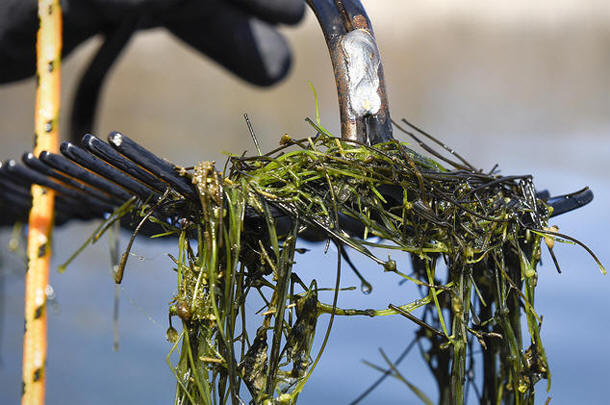
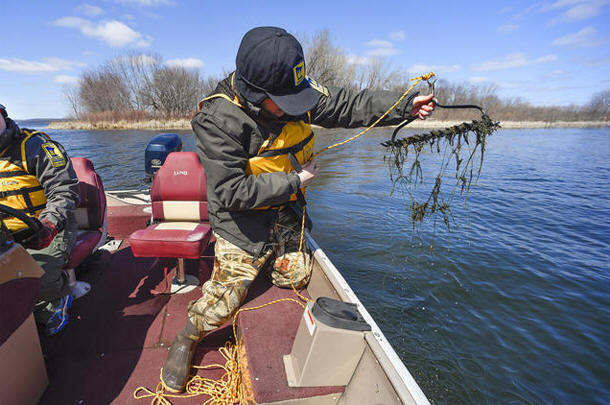
Below are images that may help you identify Starry Stonewort. Remember, if you find it, report it. Our local contact is Mark Ranweiler. He can be contacted at 218-739-7576.
Zebra Mussels
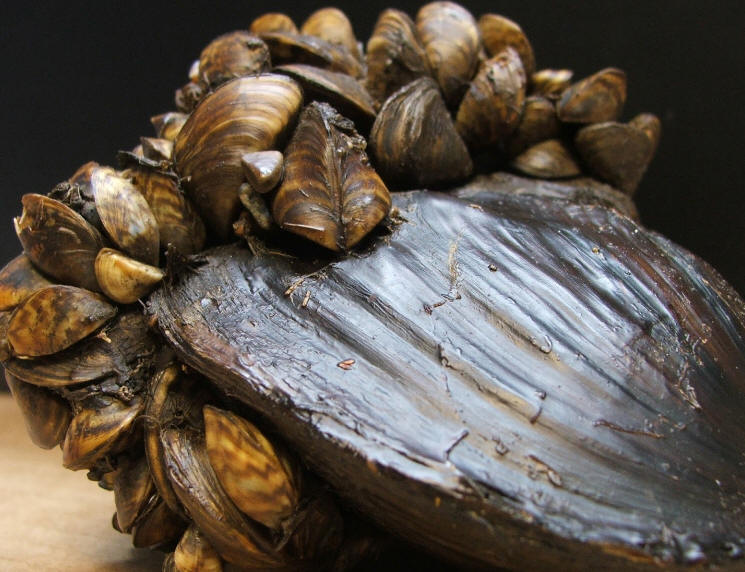
Zebra mussels are small, fingernail-sized animals that attach to solid surfaces in water. Zebra mussels have spread throughout the Great Lakes, parts of the Mississippi River, and other rivers and inland lakes. They were first found in Minnesota in the Duluth/Superior Harbor in 1989.
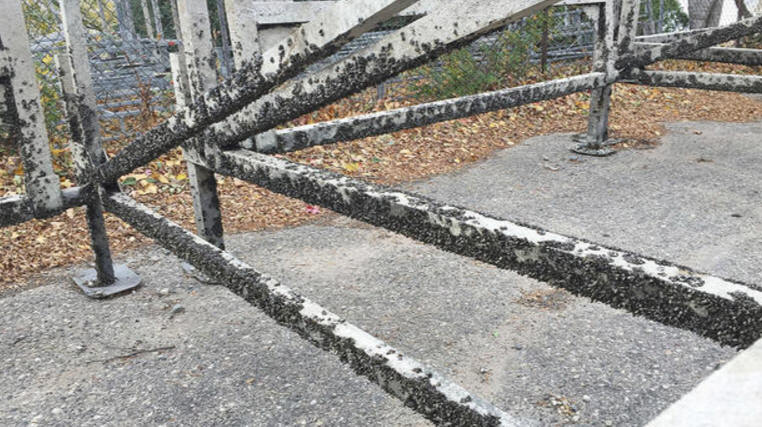
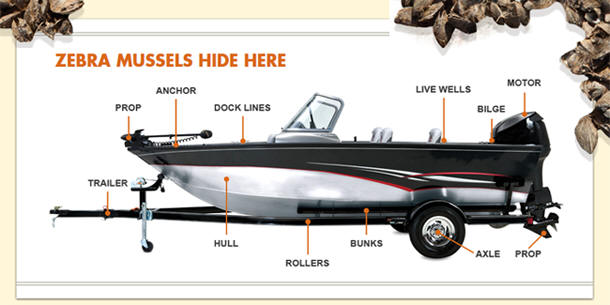
Mussels attach to boats, nets, docks, swim platforms, boat lifts, and can be moved on any of these objects. They can also attach to aquatic plants. Mussels can also be spread by carrying the veliger (a larval mollusk) in water that has not been drained from boats or bait buckets.
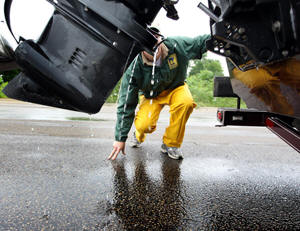
You can't always see zebra mussels because their larvae are invisible to the naked eye. They can survive for days in water trapped in a boat. The only way to be sure you're not carrying zebra mussels to another body of water is to always inspect your boat, trailer, and gear and clean, drain, and dry boats and buckets when leaving an infested area.
Zebra mussels can impact the environment of lakes where they live. They eat tiny food particles that they filter out of the water, which can reduce the available food for larval fish and other animals, and cause aquatic vegetation to grow as a result of increased water clarity. Zebra mussels can also attach to, and smother, native mussels.